Is your motor your personality profile?
Motor profiles?
Motor profiles or motor refers to movement that is instinctive, occurring without conscious thought or control. It is executed with ease and efficiency, often leading to quick and effective results.
The most powerful method of profiling is through physical test assessments. This includes simple balance and coordination tests that enable us to interpret, explain, and clarify behavioral preferences. Of course, you will also receive sufficient accompanying course materials.
Your motor not only provides insight into your physical (athletic) aptitudes but also reveals your unique personality, strengths, attributes, and learning style.
It explains the origins of your qualities and characteristics, which is where your true potential for growth lies.
Below, you can view impressions of how the test assessments are conducted, as well as video clips demonstrating the scientific foundation on which they are based.
-

'Motor signatures'
This is how we assess you and identify your strengths: lighthearted, comfortable, educational, straightforward, verbal and nonverbal, and honest. It’s a fun, fascinating, and mind-blowing process that yields clear, practical, and powerful results.
What empowers people most? It is their talent and competency profile that drives action and is shaped by action. So what is your motor action) signature?
You are never just a "profile." You are versatile and constantly adapting. That is why I will demonstrate that. In fact, you embody multiple roles in one: you learn, prepare, challenge, act, do, and perform. It reveals your uniqueness through your different "selves." -

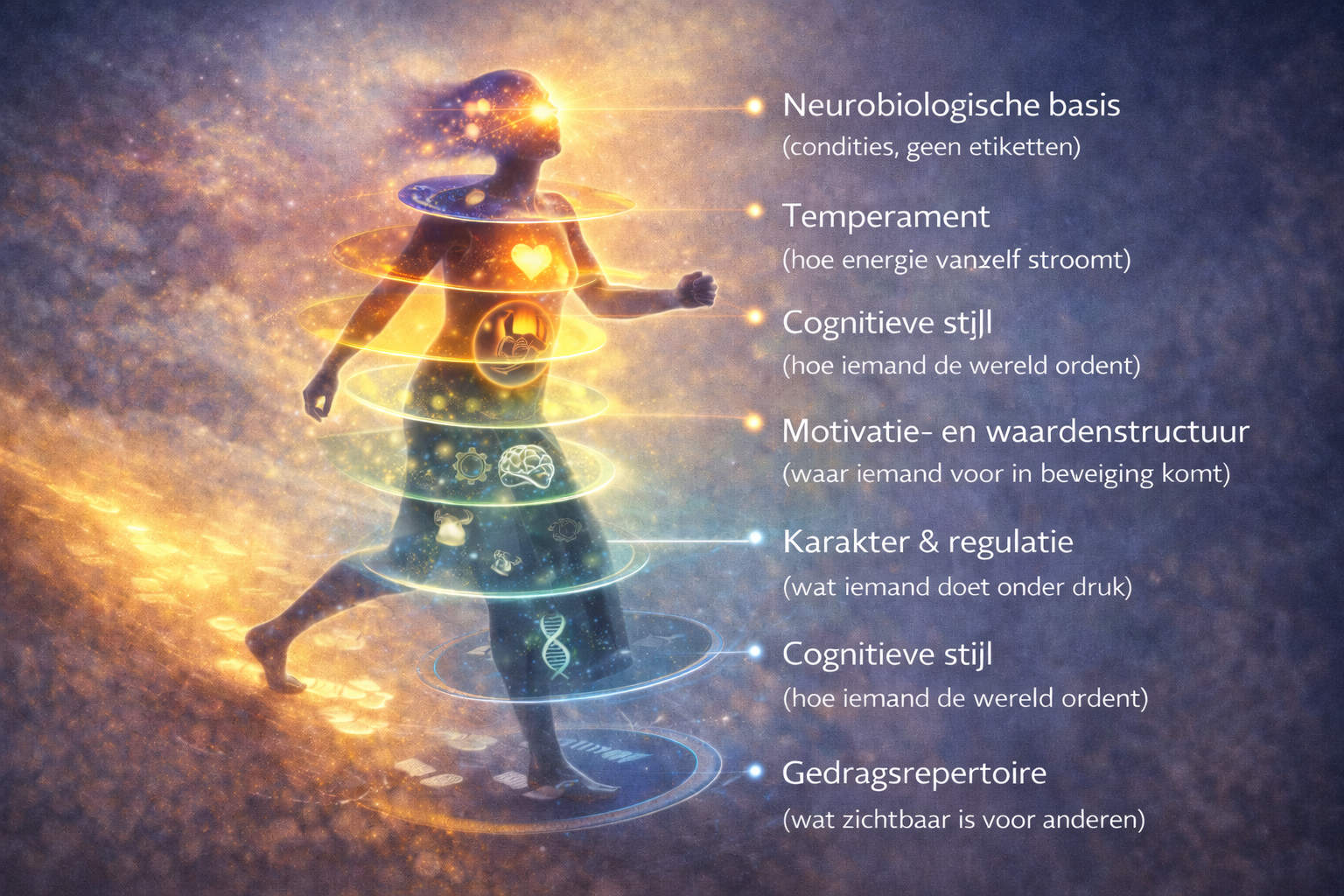
Body - Brain - Behaviour
You gain valuable insights into your motor and your learning functions—essentially, your brain functions. These functions reveal your typical behaviors as well as the areas where you struggle.
Through presentations and brain models, we make everything visually clear.
You’ll learn about your personality traits, competencies, type preferences, how relationships are formed, learning strategies, communication and leadership styles, preferred tasks, and, of course, how to find the right fit with suitable courses of study, roles, professions, and work environments.
-

'You move, therefore you learn'
Before you can excel in your talent or motor , there must be intention—a reason to initiate movement. We refer to this as motivation.
Motivational drivers are evaluated through separate exercises that you will be taught.
Motivation—or putting yourself into passionate motion—is something that can be cultivated. Your movement signature, your posture and attitude, and the impression you make on others will also influence your communication skills. Once you have studied motor and learned how to apply them to project confident behavior, your success will grow.
Curious?
Go to the homepageand send a message. Let me know what you need.
- body-brain-behaviour -
Motricity is a core driver of brain development and a measurable channel for behavioral expression. Because motor reflects intention, learning capacity, self-regulation, coordination, exploration, and adaptation, it provides a powerful observational pathway into a person’s competencies, behavior patterns, strengths, and temperament-based personality markers—within a dynamic brain-body feedback system.
Motricity accelerates and organizes the brain, and movement acts as a revealing channel of personality, competence, and behavior—because you are how you learn, how you execute, and how you adapt in action.
Action pictures - Understanding motricity


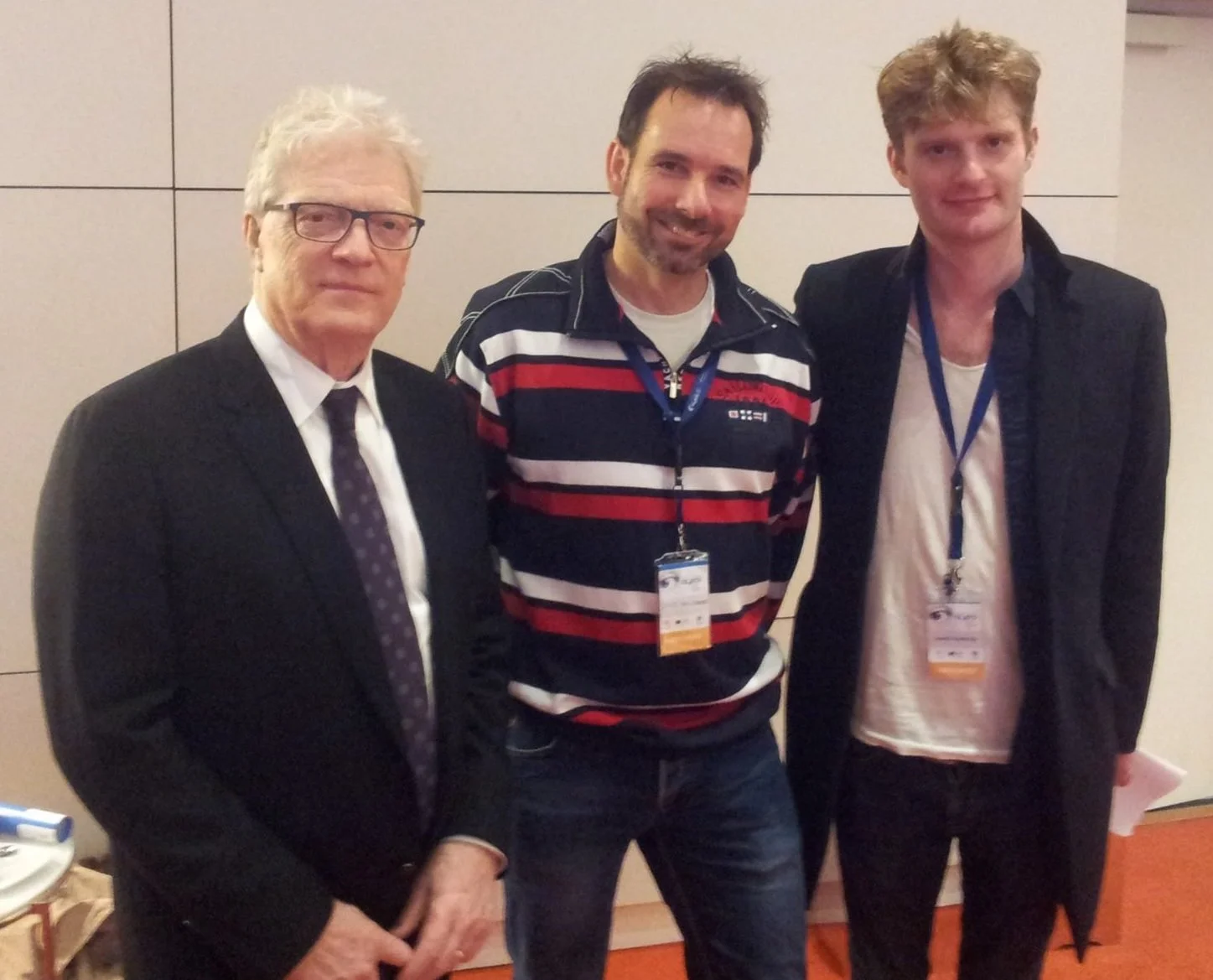
Amsterdam - Demo ATA with Bertrand
Sportzone Sittard (NL) - profiling elite athlete handball

Workshops Fontys Teachers Academy Sittard - coaching study postures (motricity) and relating learning strategies

Brabant Sport (NL) - info- & workshop introduction value of motorprofiles

Curaçao - 'dual career guidance' student athletes

Workshops for high school students (HAVO-VWO) - tailor your study strategies to your motor -

Sportzone Sittard (NL) - workshop talent profiling - youngsters in a dual career

Dortmund (Ger) - profiling elite athlete pro-handball - Prep CL game

Workshop dual career IHandbal Aalsmeer (NL) Handbal talents (motricity) and ‘game style, attitude and personality’
“Brains have only one function: to produce functional bodily movements.” Rodolfo Llinás
This scientific understanding forms the foundation of this distinctive approach to validating an individual’s motor .
Rodolfo Llinás - Professor Emeritus, Research Professor
Department of Neuroscience and Physiology Department of Neuroscience, New York
“Professor Llinás is regarded as the founder of modern neuroscience. His contributions are reflected in over 800 scientific publications. If you’d like to learn more about his scientific insights, you can watch these two interviews below.”
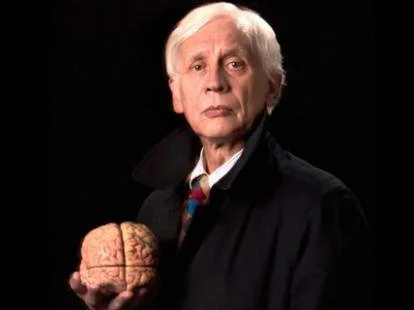
Interview with Rodolfo Llinás: what do brains do? Interview with Rodolfo Llinás: what do brains do?
Scientific sources
ATA - Scientific Committee | The scientific validity in terms of Motor Signatures and Preferences.
Prof. Dr. Eric Scherder (top left) - Prof. Dr. Wolfgang Schollhorn (top right)
Prof. Dr. Jan Vermunt (bottom left) - Sir Ken Robinson, PhD (bottom right)